



Inside CoBlack
The mask for the machine
When people believe AI is judging them, they hide their empathy and creativity to look more like a machine. CoBlack was built so no one has to.
 Mashal Zaidi · June 30, 2026 · 2 min read

On this page
Editing yourself out
Before an AI interview, a candidate reads her answer back one more time. She deletes the part about staying late to calm a frightened new hire. She keeps the line about a 12 percent efficiency gain. The machine, she assumes, only counts the number. So she gives it the number, and quietly leaves herself out.
What the camera changes
That instinct is no longer rare. It has been measured. A study published in Harvard Business Review in July 2025 by Jonas Goergen, Emanuel de Bellis, and Anne-Kathrin Klesse followed more than 13,000 people across 12 lab and field experiments. When candidates believed an AI hiring assessment was judging them, they amplified their analytical traits and muted their empathy, creativity, and intuition.
A quieter, smaller self
The researchers traced it to a simple belief: people assume a machine cares only about hard logic, so they offer it only hard logic. The effect made the candidate pool more uniform and, the authors found, less accurate. People were not lying. They were shrinking. They edited out the very human parts that make a good colleague, on the guess that those parts would not score.
Judged by someone you cannot see
Most of the time, the candidate is guessing in the dark. Greenhouse's 2026 Candidate AI Interview Report found that 70 percent of candidates were never clearly told, before it began, that AI would evaluate them. For one in five, the realization arrived only once the interview had already started. When the standard stays hidden, people fill the silence with their worst guess about what a machine wants to hear.
A fairness gap
The result is a quiet loss of trust. In that same Greenhouse research, only 8 percent of job seekers called AI hiring fair. A process built for speed has taught people that the safest move is to become less of themselves. That is a strange thing to ask of anyone who simply wants to work.
We will not reward the mask
CoBlack was built on the opposite belief. A job search should not require a person to hide the best of who they are. We do not sit a candidate in front of a machine and ask them to perform for it. We match on capability, drawn from validated employer career pages and real ATS feeds, against what a person has actually done. There is no separate audition for an algorithm.
So the warm instinct and the efficiency gain both count, because both are real. Technology should make a person clearer to an employer, not press them into a narrower shape. We walk beside the job seeker. We never replace them, and we never ask them to replace themselves.
The whole person is the point
Empathy, creativity, and instinct are not noise to be filtered out before the real evaluation begins. They are often the reason someone is good at the work. A hiring system that trains people to bury them is not measuring talent. It is measuring how well a person can imitate a machine.
You should not have to wear a mask to be seen. The one behind it was always the one worth hiring.
Keep reading
More from Inside CoBlack →
Not for sale
Most job seekers assume their data goes only to employers. On eight of nine major platforms, it is also for sale. CoBlack was built to sell none of it.

The one-way interview
Nearly a third of job seekers now walk away from one-way AI interviews. The interview is the one part of hiring CoBlack will not automate.
Innovation, applied
Most career tools were built to help you survive the system. CoBlack was built to break it, with the Kosmos Engine at the core.

The Hidden File
99 percent of Fortune 500 companies are screening you with software. One lawsuit just pulled back the curtain on how the hidden file gets built.
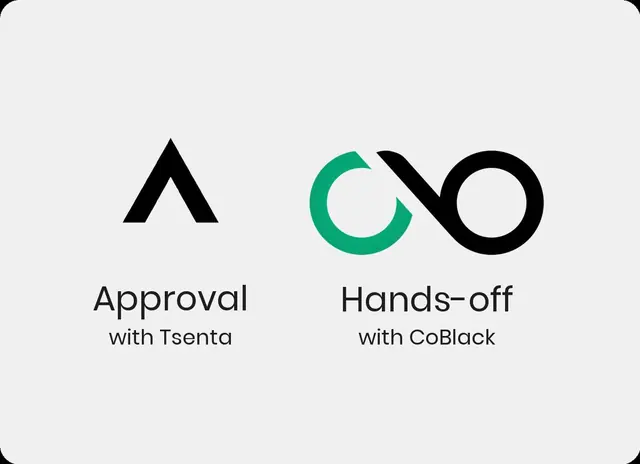
Tsenta waits for approval. CoBlack works hands-off
Tsenta is a new YC startup with broad ATS coverage, but it shows a diff and requires your approval on every application, and meters after 25 apps.